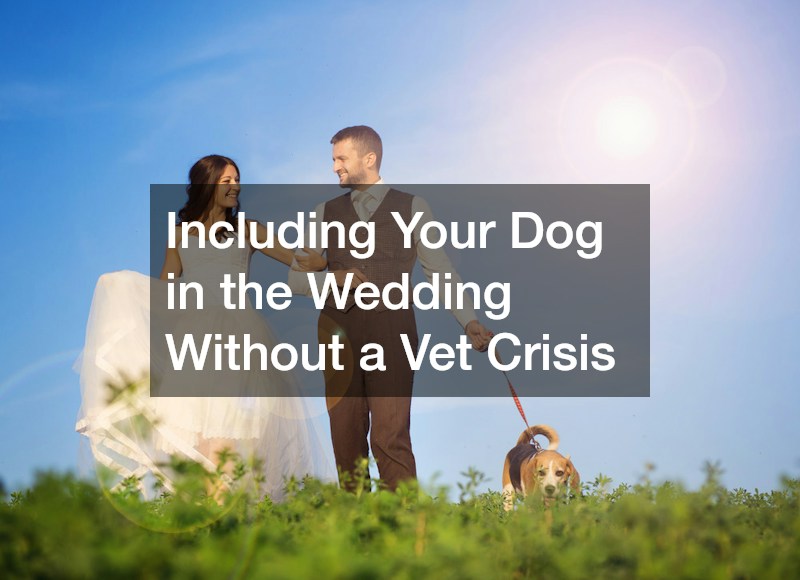

Having your dog walk down the aisle or pose for photos in a tiny bow tie can make your wedding day feel complete, but big celebrations come with real risks for pets who aren’t used to crowds, noise, and rich food lying around. With a little planning, you can let your furry friend take part in the festivities while keeping them safe, calm, and healthy from start to finish. This guide walks through the practical steps that let you enjoy the moment without worrying about an unexpected trip to urgent animal care.
Choosing the Right Role for Your Dog
Not every dog is suited to every part of a wedding, and matching the role to your dog’s temperament matters more than matching their outfit to the color scheme. Before you settle on anything, think honestly about how your dog behaves around strangers, loud music, crowds, and other animals, since a wedding compresses all of these triggers into just a few hours. A calm, well-socialized dog who’s comfortable being touched by strangers and unfazed by applause or music might handle a bigger job: walking the aisle, serving as ring bearer, or even staying for cocktail hour to mingle with guests. These roles ask a lot of a dog’s nerves, so they’re best reserved for dogs with a track record of staying relaxed in similarly chaotic settings, like busy parks or crowded family gatherings. A more anxious, reactive, or easily overstimulated dog may do better with a smaller, lower-pressure role. Appearing for photos before the ceremony, posing for a few pictures with the couple, and then heading home with a trusted friend or sitter lets them participate without being pushed past their limits. Even 20-30 minutes of structured, well-managed time is often plenty for a dog who isn’t used to large groups. It also helps to consider the venue itself. A dog who’s fine at an outdoor, open-air ceremony with room to retreat may struggle in a packed indoor reception hall with tight spaces and no easy exit. Scaling the role to both the dog’s personality and the physical environment reduces the odds of a stressful moment for your dog and an interrupted ceremony for you.
- Ring bearer or flower dog for dogs that are comfortable on a leash around crowds, noise, and strangers reaching out to pet them
- Photo-only appearance for dogs that get overstimulated easily — plan for a 10-15 minute window before the ceremony, then hand them off to a trusted friend or sitter
- Greeting guests during arrival when things are quieter and the dog can approach people one at a time instead of facing a crowd all at once
- Staying for the reception only if they are relaxed around food, music, and dancing, and only in a space where they can retreat if needed
- No formal role at all, just a calm presence at the rehearsal dinner or getting-ready photos, for dogs who do best with familiar faces and low stakes
Preparing Your Dog in the Weeks Before the Event
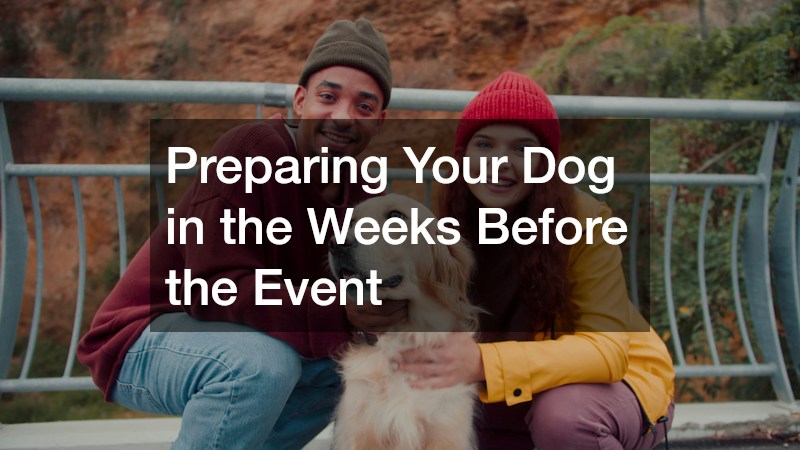
The months leading up to the wedding are the best time to build your dog’s tolerance for the sights and sounds they will encounter. Short practice sessions with wedding attire, crowds at a park, or recorded music can help desensitize a dog that tends to get nervous. Gradual exposure reduces the chance of a panicked reaction on the actual day, when there is far less room to manage a meltdown.
It also helps to schedule a routine wellness visit with your regular veterinarian a few weeks ahead of time to confirm your dog is healthy enough for a long, stimulating day. This is a good moment to ask about mild anxiety support options if your dog tends to get stressed in new environments. A vet can also flag any underlying issues, like joint pain or sensitivity to heat, that might affect how long your dog can comfortably participate.
Assigning a Dedicated Dog Handler for the Day
One of the most overlooked pieces of wedding planning is deciding who will actually watch the dog once the ceremony starts. You and your partner will be busy, and guests often assume someone else has it covered, which can leave a dog unsupervised at exactly the wrong moment. Choose a responsible friend or family member, or hire a professional pet sitter, whose only job that day is managing your dog’s needs.
- Confirm the handler knows your dog’s triggers and comfort signals
- Give them a schedule for bathroom breaks and quiet time
- Make sure they have your dog’s leash, water, and a crate or carrier on hand
- Provide a backup contact in case the primary handler gets pulled away
Dog-Proofing the Ceremony and Reception Spaces

Wedding venues are full of hazards that are easy to miss when you are focused on flowers and seating charts. Floral arrangements often contain plants that are toxic to dogs, dropped food can trigger stomach upset, and decorative candles or string lights pose burn and chewing risks. Walk the venue ahead of time with your dog’s safety in mind, not just the aesthetic.
It also helps to designate a quiet retreat area away from the main event, stocked with water, a familiar bed, and a few toys, where your dog can decompress if things get overwhelming. Guests tend to want to pet and feed a wedding dog, so having a sign or a word with the wedding party about limiting treats can prevent an upset stomach later. A calm space to return to can make the difference between a dog that lasts the whole event and one that needs to go home early.
- Remove lilies, tulips, and other toxic flowers from reachable areas
- Keep cake, alcohol, and rich appetizers out of paw’s reach
- Tape down loose cords and secure lightweight decorations
- Set up a shaded or climate-controlled area for hot or cold weather
Knowing What to Do if Something Goes Wrong
Even with careful planning, dogs can get into trouble at a busy event, whether it’s eating something they shouldn’t or overheating from excitement and layers of formal wear. Before the big day, research the closest emergency vets to your venue and save the address and phone number in your handler’s phone, not just your own. Having this information ready means nobody has to scramble to search for help while also trying to calm a distressed animal.
It is worth packing a small pet first aid kit that includes basic supplies, along with a copy of your dog’s vaccination records in case a clinic needs them on short notice. Discuss a simple action plan with your handler so they know to remove your dog from the crowd at the first sign of distress rather than waiting to see if it passes. Acting quickly on symptoms like vomiting, excessive panting, or wobbliness gives your dog the best chance of a fast, uneventful recovery.
- Pack gauze, tweezers, and a pet-safe antihistamine approved by your vet
- Keep your dog’s microchip and ID tag information current before the event
- Note the venue’s exact address for quick directions in an emergency
- Confirm whether your venue allows a vehicle to be moved quickly if needed
Including your dog in your wedding can add warmth and personality to the day, but it works best when safety is planned alongside the sentiment. Take time to prepare your dog, assign someone to watch over them, and know exactly where to turn if a problem comes up. With that groundwork in place, you can focus on celebrating instead of worrying, knowing your best friend is set up to enjoy the day right alongside you.