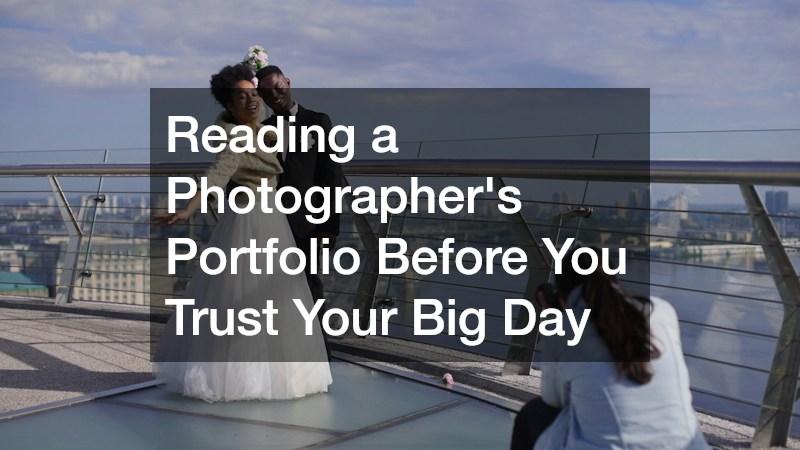

Choosing someone to document one of the most important days of your life shouldn’t come down to a pretty website or a glowing testimonial alone. A portfolio is your window into how a photographer actually sees, shoots, and tells stories, but most couples don’t know what they’re really looking for when they scroll through those galleries. Learning to read between the lines of a portfolio can save you from heartbreak later, when there’s no redo button for a missed first kiss or an awkward family photo. This guide breaks down exactly what to look for so you can walk into your decision with confidence instead of guesswork.
Look Beyond the Highlight Reel
Every portfolio is curated, which means you’re seeing the best of the best, not a realistic sample of an entire wedding day. Instead of simply admiring pretty shots, ask yourself whether the images represent a full range of moments, not just the ten most dramatic ones. A strong portfolio should show quiet in-between moments, candid laughter, and small details alongside the big posed shots. If every image looks like it came from the same five minutes of golden hour, you’re not getting the full picture of what your day might actually look like.
Pay attention to variety in settings, lighting conditions, and emotional tone. Weddings happen in ballrooms, backyards, rainy parking lots, and everything in between, so the portfolio should reflect that range of real-world unpredictability. A photographer who only shows flawless outdoor light may struggle when your reception venue has dim string lights and a crowded dance floor.
Request a Full Gallery From One Event
Highlight reels show cherry-picked images, but a complete gallery from start to finish tells you how a photographer handles an entire day, including the less glamorous parts. Ask to see every photo from a single wedding, from getting-ready shots in a cramped hotel room to the last dance under less-than-ideal lighting. This full-day view reveals consistency, which matters far more than a handful of stunning outliers. A wedding photographer who can produce strong images from the first hour to the last is demonstrating real skill, not just luck with one perfect shot.
When reviewing a complete gallery, look for how many images feel repetitive or nearly identical. A professional edits down thousands of frames into a few hundred standout shots, so redundancy or filler suggests weaker editing skills. Also notice whether the emotional arc of the day comes through, from nervous anticipation in the morning to relaxed celebration by night.
Check Editing Style and Color Consistency
Editing style is one of the most personal and lasting choices you’ll make, since it shapes how your memories will look for decades. Some photographers favor warm, golden tones, while others lean toward moody, desaturated looks, airy pastel palettes, or crisp, true-to-life color. None of these is objectively better, but you should know which one you’re drawn to before you book, since asking a photographer to abandon their signature style rarely produces great results.
Scroll through several full galleries, not just the highlight reel, and notice whether the editing stays consistent across different lighting conditions and locations. A wedding typically moves through harsh midday sun, soft golden hour, and dim reception lighting, each of which tests a photographer’s skill differently.
Skin tones are a good gauge: they should look natural and similar from image to image, not shifting from orange in one photo to gray or greenish in the next. Wild swings in tone or saturation from one gallery to the next can signal inexperience or an inconsistent process, especially if every wedding in their portfolio looks dramatically different from the others. A seasoned photographer usually has a recognizable thread running through their work, even as backdrops and seasons change. If you notice this consistency, it’s a strong sign they have a reliable workflow you can count on for your own day.
- Warm and golden edits tend to suit outdoor, natural light weddings, especially those during golden hour
- Moody and dark tones often work better for evening or indoor receptions with candlelight or string lights
- True-to-life color editing keeps skin tones and dress whites looking natural, with whites reading as white, not blue or yellow
- Black and white conversions should add emotion, not hide poor exposure or weak composition
- Watch for heavy filters or trendy presets that may look dated within a few years
- Check if skin tones vary wildly between photos, a sign of inconsistent or rushed editing
- Consistency across multiple weddings suggests a defined, reliable style
- Ask to see a full gallery, not just highlights, to confirm the editing holds up across hundreds of images
Evaluate How Candid Moments Are Captured
Posed portraits are important, but candid moments often become the images couples treasure most years later. Look closely at how a photographer captures laughter, tears, and spontaneous interactions between guests. Genuine candid shots require quick reflexes and an instinct for timing, so portfolios heavy on posed shots but thin on real emotion may indicate a photographer who struggles with unscripted moments. The best portfolios balance both styles seamlessly, showing that the photographer can direct a formal portrait and then disappear into the background to catch something real.
It also helps to notice whether candid shots feel intrusive or natural. Great candid photography captures guests mid-laugh or a parent wiping away a tear without those people appearing aware of the camera. If every candid shot shows people glancing directly at the lens, that suggests a more posed and less observational shooting style, which may not match what you’re hoping for on your own day.
Review Client Feedback and Past Testimonials
A portfolio shows technical skill, but testimonials and reviews reveal how a photographer works with real people under real pressure. Look for specific comments about communication, punctuality, and how the photographer handled unexpected hiccups like rain delays or schedule changes. Vague five-star reviews with no detail are less useful than longer, specific stories from past clients. Reach out directly to a couple whose wedding appears in the portfolio if contact information is available, since firsthand accounts often reveal details that never make it into a polished review section.
- Look for mentions of responsiveness during the planning process
- Note any comments about flexibility during schedule changes or weather issues
- Watch for repeated praise about making nervous family members feel comfortable
- Check whether past clients mention receiving their final gallery on time
Reading a portfolio carefully takes more time than a quick scroll, but it’s one of the smartest investments you can make before booking anyone for your wedding day. Focus on full galleries, consistent editing, genuine candid moments, and honest client feedback rather than getting swept up in a handful of stunning highlight images. These details add up to a much clearer picture of how your own photos will turn out. Take your time, ask questions, and trust the patterns you see across an entire body of work, not just the best single frame.